
Teeth Whitening in Columbia, MD
Veneers on front upper teeth


Having that Hollywood smile is something so many of us are after. Here at our family dentistry in Columbia, MD, we think that’s very understandable considering how smiles are so integral to a person’s appearance and attractiveness.
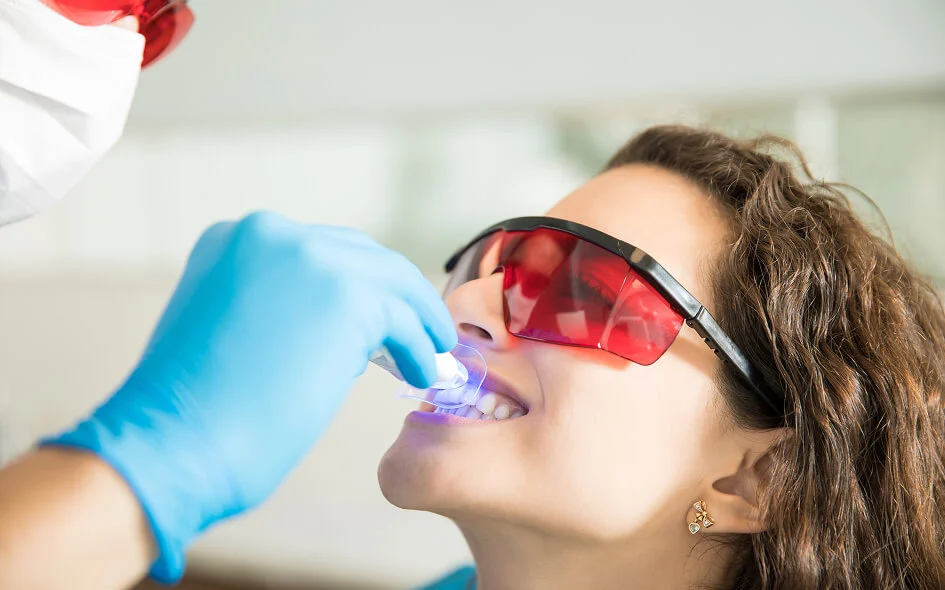
Whitening is far from complicated, but there are a few things we want you to know here at Model Dental Clinic. These should help give you a clearer idea of what to expect and what the process is like.
Dental Assessment Is Necessary
It would be wrong to start whitening your teeth without assessing them first. Whitening materials like hydrogen peroxide work on the enamel and aren’t supposed to enter the core of a person’s teeth. We have to check if any of your teeth are cracked or have damage that’ll allow the entry of peroxide.
Why is peroxide bad? If peroxide gets into your teeth and reaches the nerves, it can lead to serious damage that’s irreversible. Take care not to mistake this irreparable damage with sensitivity. Some people have slightly more sensitive teeth after whitening. This sensitivity is minor and most often temporary; it’s not an indication of nerve damage.
Unfortunately, you need to know that not all stains can be removed. Stains that were caused by excessive fluoride exposure earlier in life are hard to remove. We might have to bleach these teeth several times before we see improvement.
Slower Is Better
Nowadays, we like everything to be done quickly yet flawlessly. We have the means to finish whitening your teeth in an hour at our office, but that’s not always the best option. Whitening your teeth really fast is excellent in theory, but the sensitivity we mentioned earlier is more likely to happen because we’re exposing your teeth to too much in a short time.
What we can do is start the process in-office then give you instructions to follow at home. They’ll take some time, but it’ll be worth it.
There’s nothing to worry about when it comes to teeth whitening. If you need them whitened urgently, we can do that for you. Otherwise, we can tell you how to proceed while taking a little more time.
FAQs
Whitening does not work equally well on every type of discoloration. Certain types of discoloration respond better to whitening than others, while fillings, crowns, and other restorations generally do not lighten like natural teeth. A dental evaluation can help identify the type of discoloration and determine whether professional whitening is appropriate.
You may still be able to whiten your natural teeth, but whitening treatments generally do not change the color of existing fillings, crowns, or veneers. This can create a shade difference between natural teeth and restorations. Your dentist can help plan treatment if you have visible dental restorations.
Temporary tooth sensitivity can occur after whitening. If sensitivity develops, your dentist may recommend adjusting or pausing the whitening treatment and using appropriate products to help manage sensitivity. Persistent or severe sensitivity should be evaluated.
Professional whitening can help lighten many stains caused by foods and beverages. However, results depend on the type and depth of discoloration. Cutting back on stain-causing foods and beverages while keeping up with proper daily oral care can help preserve your results.
Whitening results can fade as teeth are exposed to new stains over time. Brushing and flossing regularly, maintaining professional cleanings, limiting staining foods and drinks, and following your dentist’s recommended touch-up plan can help maintain the results.
Our goal is to get the perfect smile option in Columbia, MD and we are proudly accepting new patients across the following areas: